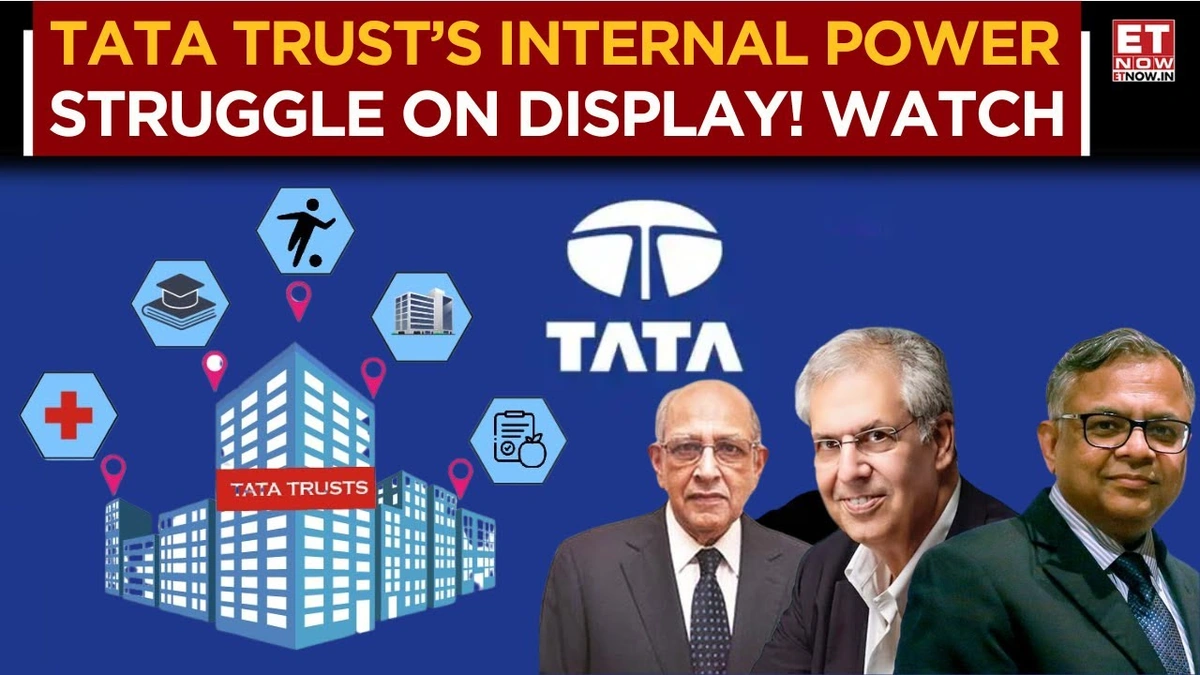
Okay, so the grapevine is buzzing – and it’s not about some Bollywood scandal this time. It’s about something far more significant for India’s corporate landscape: whispers of a potential rift within Tata Trust regarding the future of Tata Sons and its private status. Now, most people glaze over at the mention of “corporate governance,” but hear me out. This isn’t just boardroom drama; it has ripple effects that could touch everything from investment strategies to social initiatives. Let’s be honest, when Tata Trust moves, everyone notices.
The “Why” | More Than Just a Business Decision

So, why does this reported disagreement about maintaining Tata Sons’ private status even matter? It boils down to control, transparency, and the long-term vision for one of India’s most respected conglomerates. A private company has fewer regulatory requirements and greater flexibility in decision-making, but that flexibility comes at the cost of public scrutiny. And Tata Sons , being the holding company for the entire Tata Group , including powerhouses like TCS and Tata Steel, wields immense power and influence. Think of it as the difference between running a family-owned shop versus a publicly listed corporation – different rules, different accountabilities.
The “Why” angle here also dives into the very DNA of the Tata Group. Tata Trust , a philanthropic organization, owns a significant stake in Tata Sons. Its primary purpose isn’t just profit; it’s using those profits for charitable causes, impacting millions of lives across India. A shift away from a private structure could potentially alter the flow of dividends and influence the direction of the group’s social initiatives. The philanthropic focus could be diluted. The reported split underscores the complexities of balancing business interests with social responsibilities within such a large organization.
The Core Question | What Does “Private” Really Mean?
Here’s the thing: “private” isn’t some monolithic concept. It’s a spectrum. Tata Sons , as a private limited company, already operates with a degree of transparency. However, remaining private allows it to avoid the quarterly reporting pressures and shareholder activism that come with being a public company. This long-term planning horizon is often seen as crucial for strategic investments and weathering economic storms. The advantage is in patient capital, the disadvantage is less direct accountability to outside investors.
But, and this is a big but, some argue that greater public oversight could enhance accountability and improve corporate governance. Could it mitigate potential conflicts of interest? Possibly. Would it force greater transparency in decision-making? Likely. The argument isn’t necessarily about immediate profits; it’s about ensuring the long-term sustainability and ethical standing of the Tata Group . It’s a matter of future-proofing the organization against potential risks, and ensuring continued support for Tata Trust ‘s charitable activities.
The Impact on Tata’s Philanthropic Initiatives
Let’s talk about the heart of the matter: the potential impact on Tata Trust’s vast array of philanthropic initiatives. From healthcare and education to rural development and arts & culture, the Trust’s work touches nearly every facet of Indian society. According to their official website, the Trust has been instrumental in pioneering several social programs across India. Any shift in the financial structure of Tata Sons could directly influence the funds available for these programs.
I initially thought this was a straightforward financial restructuring argument, but then I realized the emotional angle is far stronger. For countless Indians, the Tata name is synonymous with trust and social responsibility. Any perceived threat to that legacy is bound to stir up anxieties. The question becomes: how do we ensure that the pursuit of profits doesn’t overshadow the commitment to social good? This is a question that needs to be asked explicitly.
Navigating the Future | Transparency and Trust
So, where do we go from here? Regardless of whether Tata Sons remains private or explores a public listing, the key is transparency. Open communication about the decision-making process, the rationale behind it, and the safeguards in place to protect the interests of all stakeholders is crucial. It’s about maintaining the trust that the Tata name has earned over decades. And that trust, let’s be honest, is more valuable than any short-term financial gain. More information is available on the Tata Trusts official website .
The split within Tata Trust isn’t just a boardroom squabble; it’s a reflection of the evolving landscape of corporate governance in India. It’s about balancing tradition with progress, profitability with social responsibility, and private control with public accountability. It’s a complex equation with no easy answers. The real story here is the ongoing negotiation between business realities and the Tata Group’s commitment to ethical and socially responsible practices. And how that negotiation will influence generations to come. Internal data shows the company’s commitment to sustainability, further emphasizing their impact on the Indian corporate landscape.
The outcome of this debate could very well set a precedent for other large family-owned conglomerates in India. How they choose to navigate the complexities of balancing private control with public accountability will be closely watched. It’s a tightrope walk, no doubt – but one that the Tata Group , with its legacy of ethical leadership, is uniquely positioned to navigate. The ongoing deliberations regarding the Tata Sons’ structure has significant implications for the larger Indian economy. And that’s what makes this story so compelling.
FAQ About Tata Trust and Tata Sons
What exactly is Tata Sons’ role within the Tata Group?
Tata Sons is the principal investment holding company of the Tata group and holds stake in the Tata companies.
How does Tata Trust benefit from Tata Sons’ success?
A substantial portion of the dividend income that Tata Sons earns is donated to Tata Trust for charitable use.
What are the primary concerns if Tata Sons goes public?
Concerns include shorter-term profit goals possibly affecting the philanthropic initiatives of the Trusts. As mentioned on this website , short term thinking isn’t always beneficial.
Could a public listing affect Tata’s brand reputation?
Potentially, but it depends on how transparency and corporate governance are managed during and after the transition.
Where can I find official information about Tata Trust’s activities?
Visit the official Tata Trusts website (tatatrusts.org) for detailed reports and updates.
Is there any official statement from Tata Trust regarding this split?
As of now, there’s no official public statement, hence these are merely reports from sources.